
About the Project
Solar Potential of the Ústí nad Labem Region: Data Foundation for Developing Future Methodologies and Frameworks in the Energy Sector (Solar)

The goal of the Solar project is to generate data that will support progress toward energy self‑sufficiency and contribute to the development of regulatory frameworks in the energy sector.
The specific objectives include:
- creating a detailed map of solar potential taking into account annual fluctuations in meteorological conditions,
- to identify the most suitable locations for the placement of solar panels,
- to create a web tool that will allow viewing the dataset.
The main output of the project will be a dataset containing a highly accurate layer of solar potential for the Ústí nad Labem Region, which will be linked to the related energy infrastructure. The resulting solar maps will be presented on the Ústí nad Labem Region data portal Portabo and on the National Geoportal INSPIRE. Another expected outcome is increased motivation among residents of the Ústí nad Labem Region to invest in rooftop solar panels. This should lead to energy and fuel savings, a subsequent local reduction in emissions, and ultimately a faster transformation and modernization in the energy sector of the Ústí nad Labem Region.
Financing
The project is supported by the Technology Agency of the Czech Republic (TA ČR) within the 2nd public competition of the Program for the Support of Applied Research, Experimental Development and Innovation in the Field of the Environment – Environment for Life.

Project Partners

Czech University of Life Sciences in Prague
Contact
doc. Ing. Vítězslav Moudrý, Ph.D.
moudry@fzp.czu.cz
Czech Environmental Information Agency (CENIA)
Contact
Ing. Jitka Faugnerová
jitka.faugnerova@cenia.gov.cz
Methodology
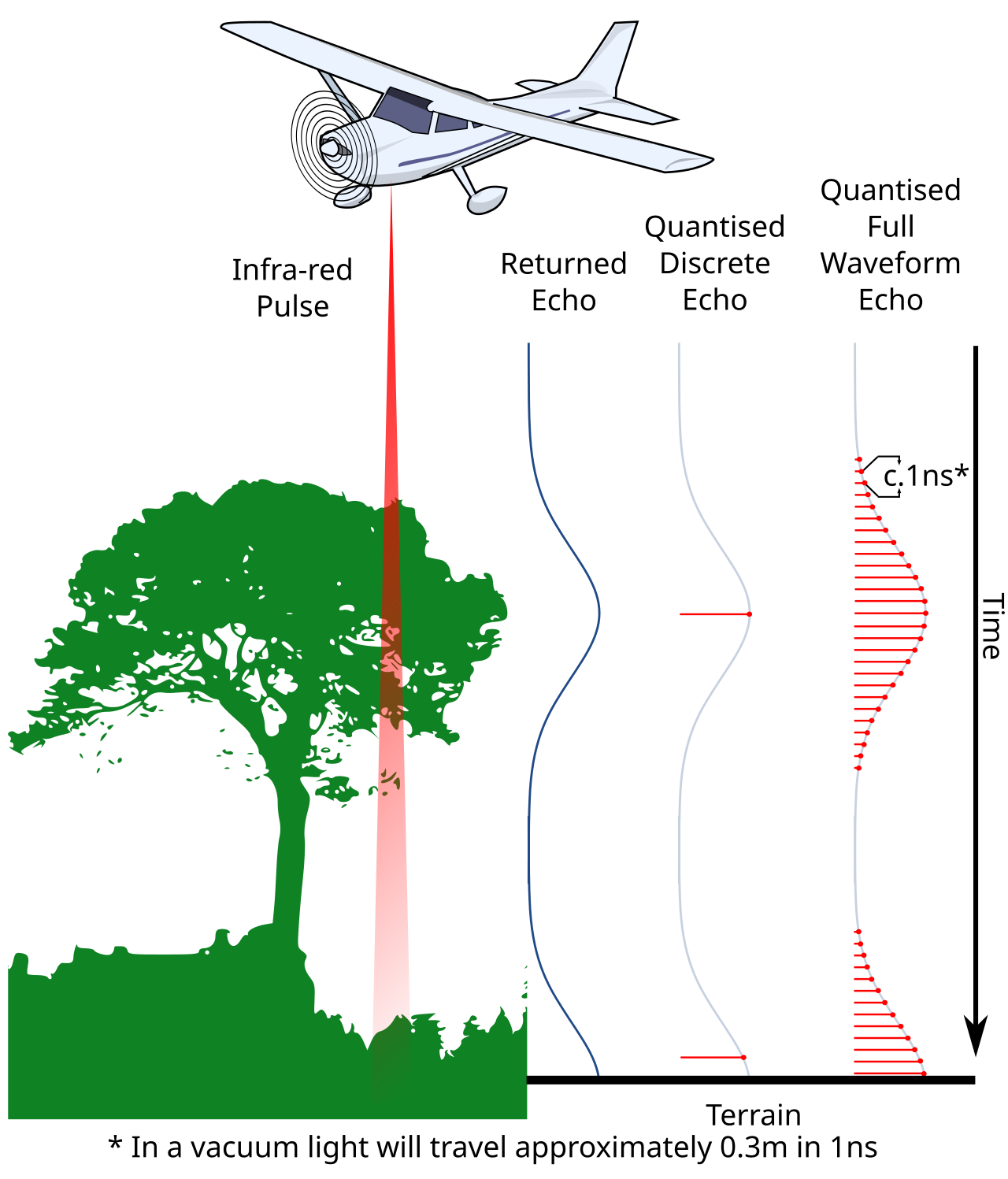
For detailed and accurate capture of the three-dimensional structure of the landscape and objects of the Ústí nad Labem Region, a modern spatial data collection method, Airbone Laser Scanning (ALS), was used in the project. The main advantages of aLS include high measurement accuracy, the ability to penetrate vegetation cover and thus obtain not only a terrain surface model, but also a model of vegetation or buildings, and the speed of collecting large areas in a short time. Thanks to the dense point cloud, a wide range of information can be derived, from a digital relief model, through the volume characteristics of the forest to detailed models of urban development. ALS is also well suited for long-term monitoring, as it provides standardized and repeatable data suitable for comparing changes over time. ALS is also highly effective for assessing solar potential, as it allows for detailed modeling of the structure of buildings, trees and terrain, including shading. Thanks to the high accuracy and density of data, suitable areas for installing solar panels can be reliably determined and their orientation and slope can be optimized.


Solar Potential